“Wine is liquid geography” – Erik Orsenna
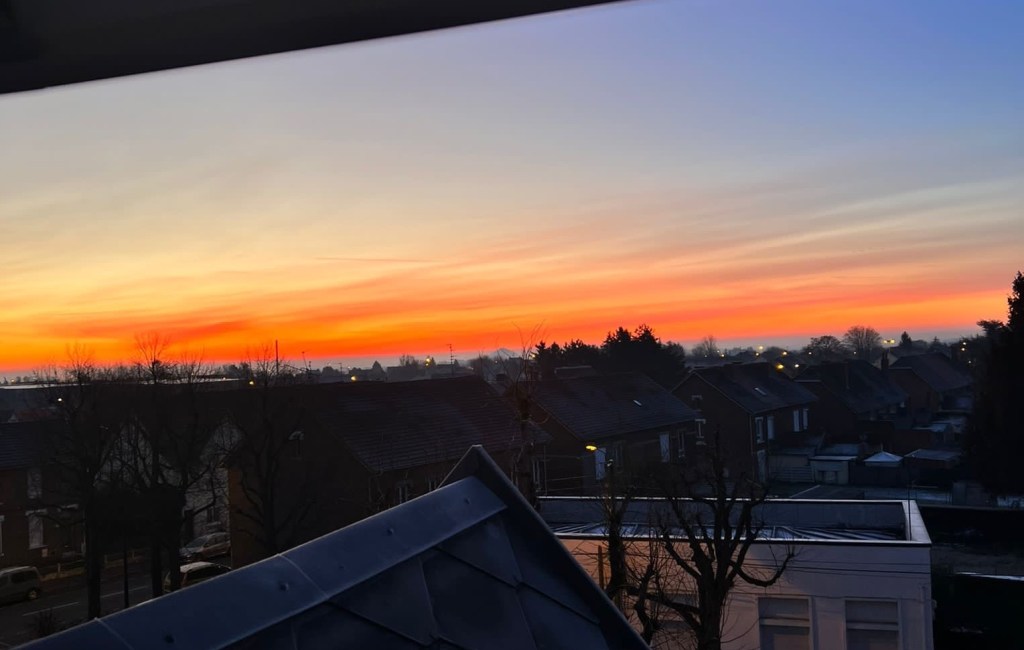
After waking up to a beautiful sunrise we packed up the car and decided to head straight for Reims and a coffee kickstarter. Normally we would need a coffee before the trip to properly wake up but not for these two hours to Reims as Ash was taking the wheel for the first time in her life on European (right hand) roads and the nerves and awareness was enabling a focus that caffeine could only be envious of. I, on other hand, donned a smiley facade while quietly removing sweat drops from my forehead , double and triple checking my seatbelt was fastened and had the Our Fathers and Hail Marys on repeat in my head. I’m only kidding folks! it wasn’t old Ana María behind the wheel so we were all incredibly calm and listened to tunes all the way down to Reims.
Unfortunately the French landscape was covered by a haze of mist for most of the journey so we couldn’t take in too much of the beautiful country roads but the white ice and snow capped trees and fields were still a beautiful image to take in.
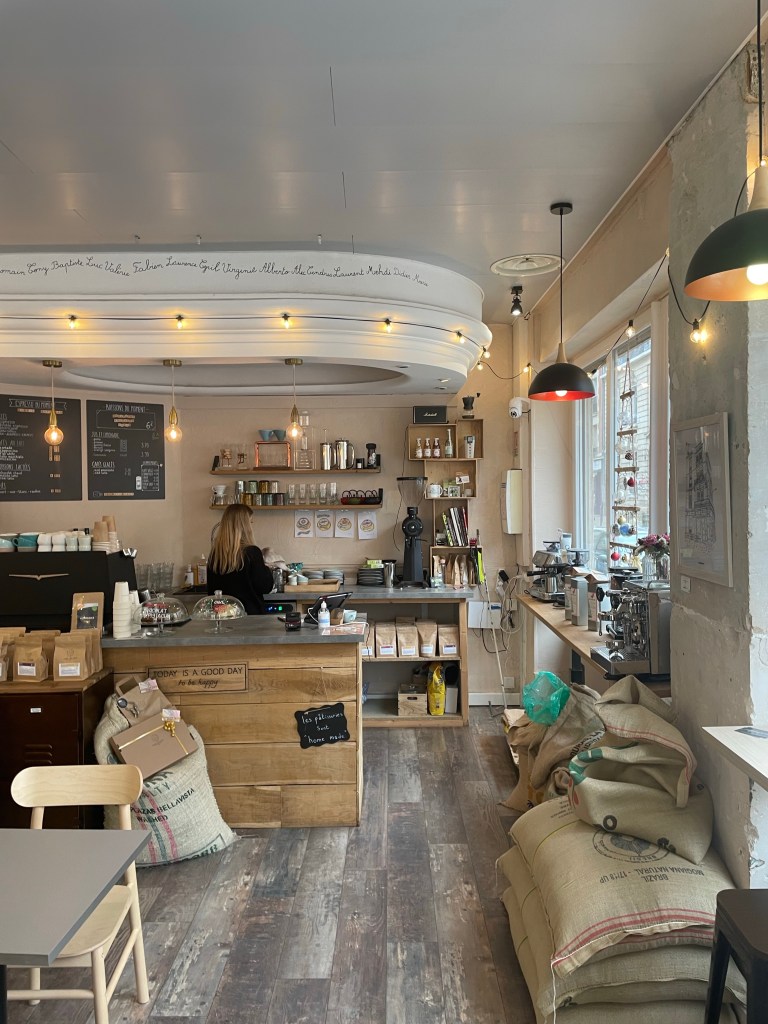
Once in Reims we parked underground at the Espace d’Erlon shopping mall and walked to J’Aime The Café for our first coffee since arriving in France. It had great reviews online and at first glance it didn’t disappoint either. Bags of fresh coffee lines the shelves and a beautiful golden roaster sat at the bag left of the shop. Ash went for an oat flat white while I ordered a Latte , normal milk. This was my error you see as the French, much like the Spanish, use boxed milk and not fresh milk. I don’t really know why as the supermarkets do sell fresh milk (leche entera or lait entier)? I think it’s got to do with the heat in summer and the milk not keeping well but that seems like a lazy excuse as every bar or coffee shop I’ve ever gone into has had a fridge. Anyway, rant over, my coffee wasn’t great as a result of the boxy milk and I decided from then on I’ll do oat milk if the places didn’t have fresh milk.
Given it had been a late coffee and we hadn’t eaten anything all day we missioned to find some lunch. For some reason (maybe the glutinous pizzas the night before) we were drawn to a healthier Vietnamese option, Saïgon Cà phê, in the heart of the city Started with some tempera prawns and then I had a Bo Bun (ginger chicken base) while Ash got the Pho Bo alongside a Saigon beer. the food did the trick but we promise we will also eat some fancy French food at some point as have booked a lunchtime taster in Ludes on Tuesday.
To burn off some of that lunch we did the 30 minute walk across town to the Taittinger Champagne Tour which Ash had booked us into for that afternoon. Our English tour comprised about 20 guests and involved a short film and a guide led visit to the famous cellars below the estate. We learned about the history of the House and the whole production process.
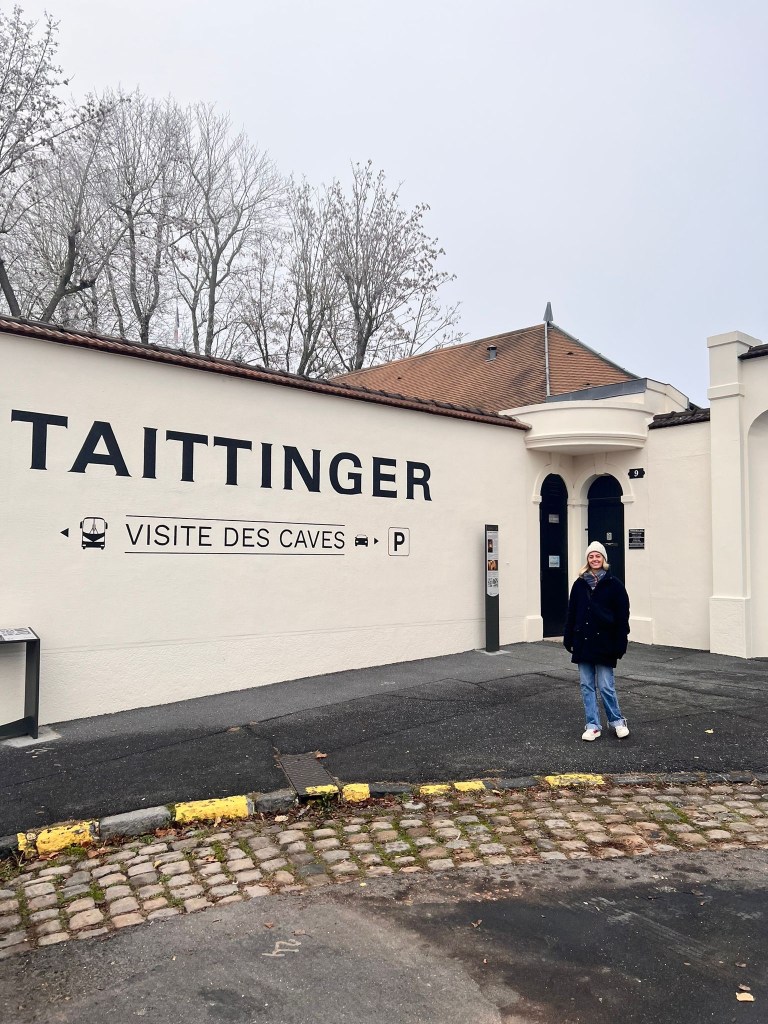
The estate is nearly 300 years old and in the 1950s, it joined the Union des Maisons de Champagne, a syndicate of Champagne houses (also known as the Grand Marques) that includes the likes of Bollinger, Laurent Perrier, Moët & Chandon, and Louis Roederer. Of the 300 million bottles of Champagne produced annually, Taittinger accounts for somewhere between 5 and 6 million of them, placing it in the top five houses by production size.
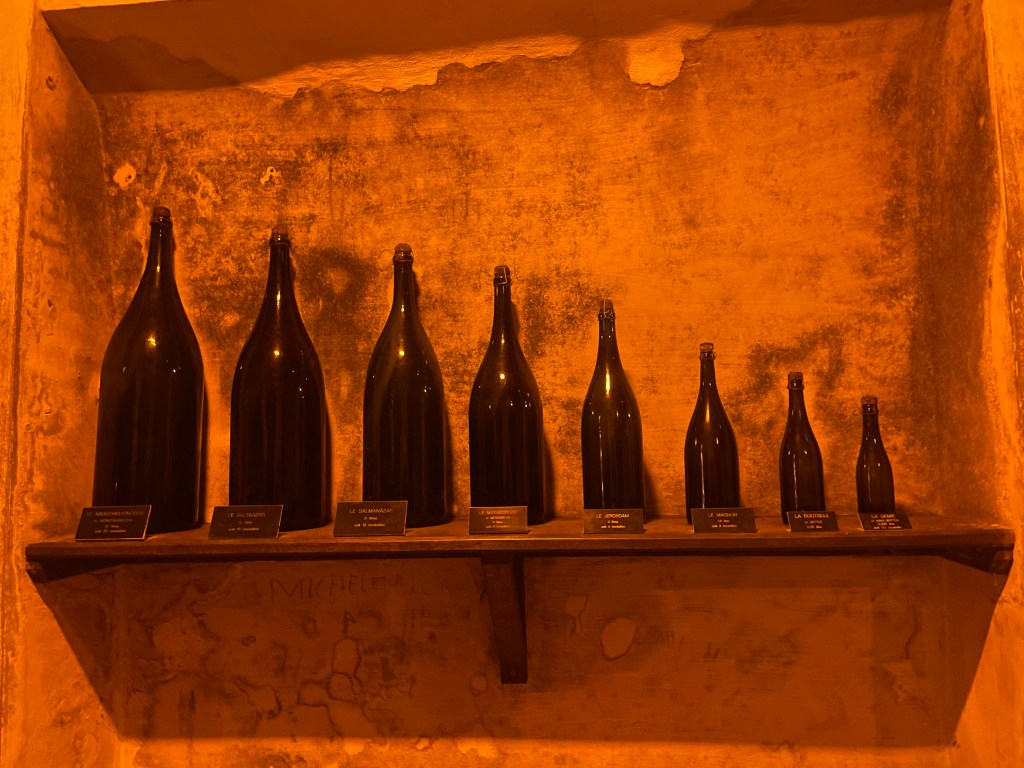
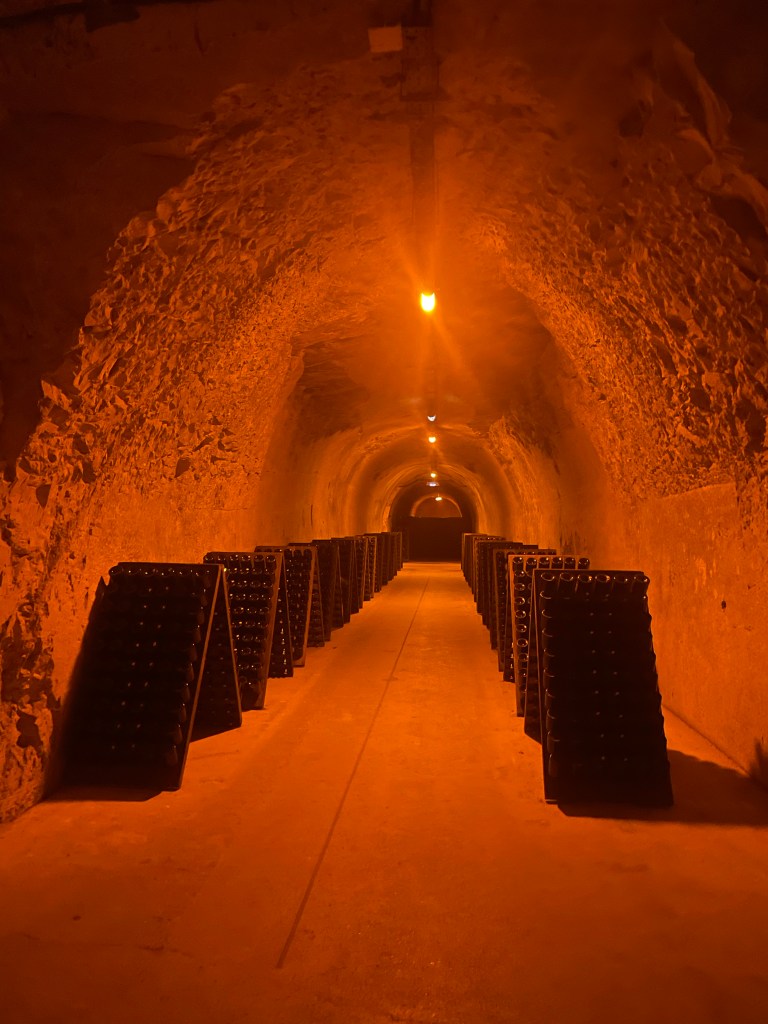
Taittinger ages its Comtes de Champagne and Comtes de Champagne Rosé wines in crayères, a 4km underground network of chalk caves. Originally dug by the Romans, the caves provide the perfect conditions for cellaring wine. To visit this underground network was an absolute highlight of the trip so far and quite mind blowing to be honest. They store roughly 2 million bottles of champagne in the caves. They also have another cellar in Reims which is 10km long and holds 25 million bottles but that cellar is machine operated and doesn’t involve the manual process of “riddling”. The aim of riddling is to loosen the sediment so that it collects in the bottle neck. This age-old process involves rotating the bottle in small increments while gradually tilting it so that it is “neck-down” (“sur pointe”). In this way, the sediment will slide down into the bottle neck. Once all the sediment has gathered in the neck of the bottle they are then taken to their other modern site where the neck is frozen at -25 Celsius, the cap removed and that frozen sediment automatically pops out before they add more sugar and yeast and cork the bottle for the next stage of the cycle. Honestly, it’s an incredibly fascinating process and I don’t think I’ll take drinking champagne for granted again.
At the end of the tour we did a little tasting of their Brut Reserve before heading out and back into the city to catch the World Cup consolation match between Croatia and Morocco. I sat and watched at Au Bureau Reims bar situated right next to the Cathedral Notre-Dame. Ash wandered off for a walk through the plaza and to look at some shops and I stayed out with a beer and enjoyed a decent game of football. When Ash returned we shared some chocolate crepes and headed out. Reims didn’t really have too many accommodation options so we booked an AirBnb in Épernay (the capital of Champagne) and did the 30 minute journey south. Upon entering we stop at a large Carrefour and did a good old cheese, meats and snacks shop for dinner. We tucked into some of this at our place and watched Ticket to Paradise on the couch. A good way to cap off a French day. It does feel good to be on holiday! Tomorrow it’s more Champagne as we visit the Avenue de Champagne, one of the most famous streets (and richest) in the world 🌎.

 KEEP RIGHT PASS LEFT